UI/UX Designer, Saigon Children & Project Art of Learning
where my people-first design eye started.
Before marketing, I designed websites for two education nonprofits. Each one started with the same question: what does the person on the other side of the screen actually need?
I redesigned a mentorship platform for students in Vietnam and led the redesign of a free tutoring nonprofit's website, from research and audits through wireframes, usability testing, and final screens.
mentorship that's easier to start, and to keep.
the problem: students in Vietnam struggled to find career guidance through a disorganized mentorship system, with no clear dashboards or matching tools.
the impact: a mentorship platform for 700+ underserved Vietnamese students, designed for bilingual accessibility. user research and usability testing improved navigation efficiency by 50%.
my role: UI/UX designer on a team of 5 designers and 3 back-end developers · Jan – Mar 2025 · Figma, Mantine UI, React.js.
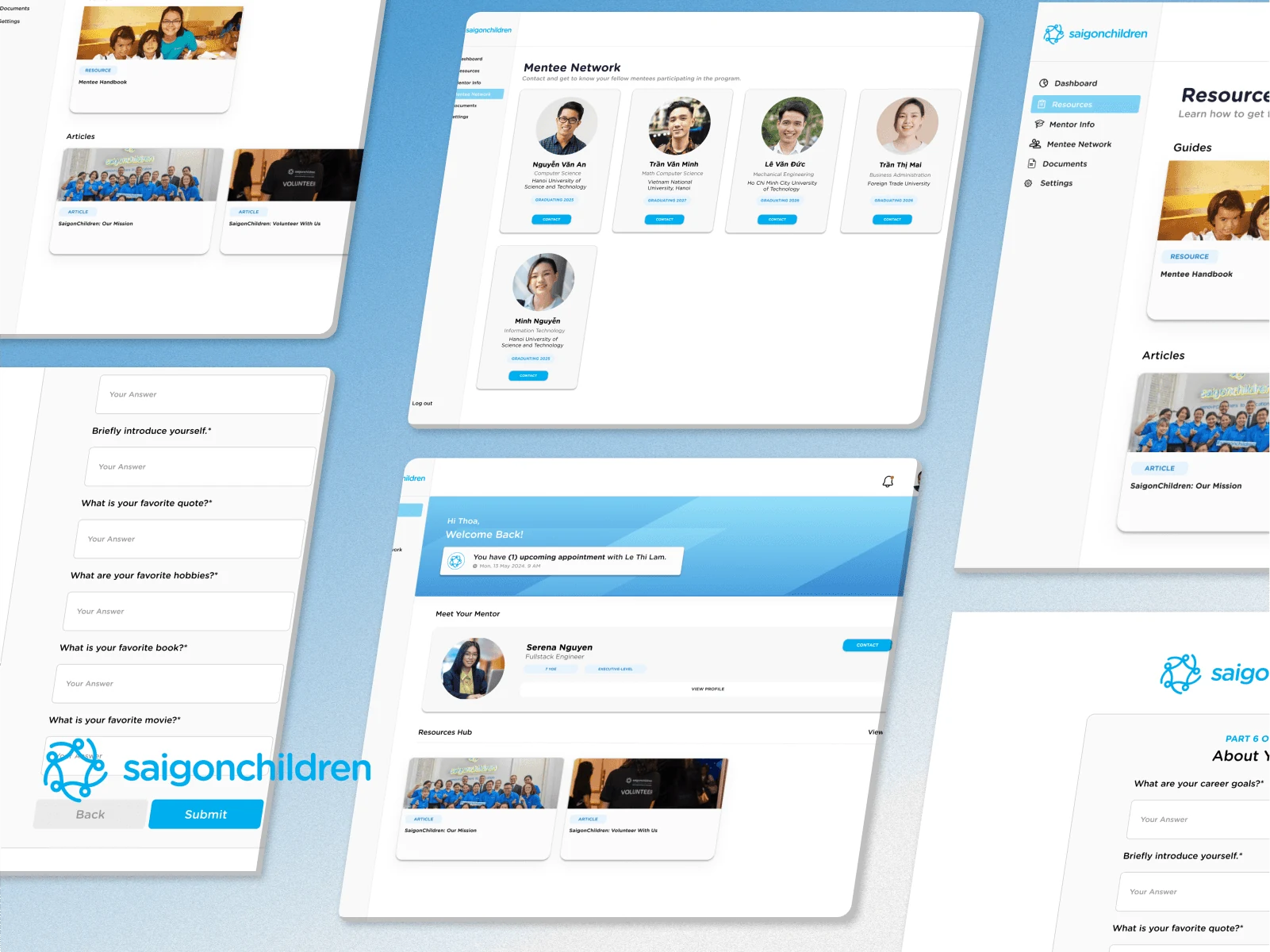
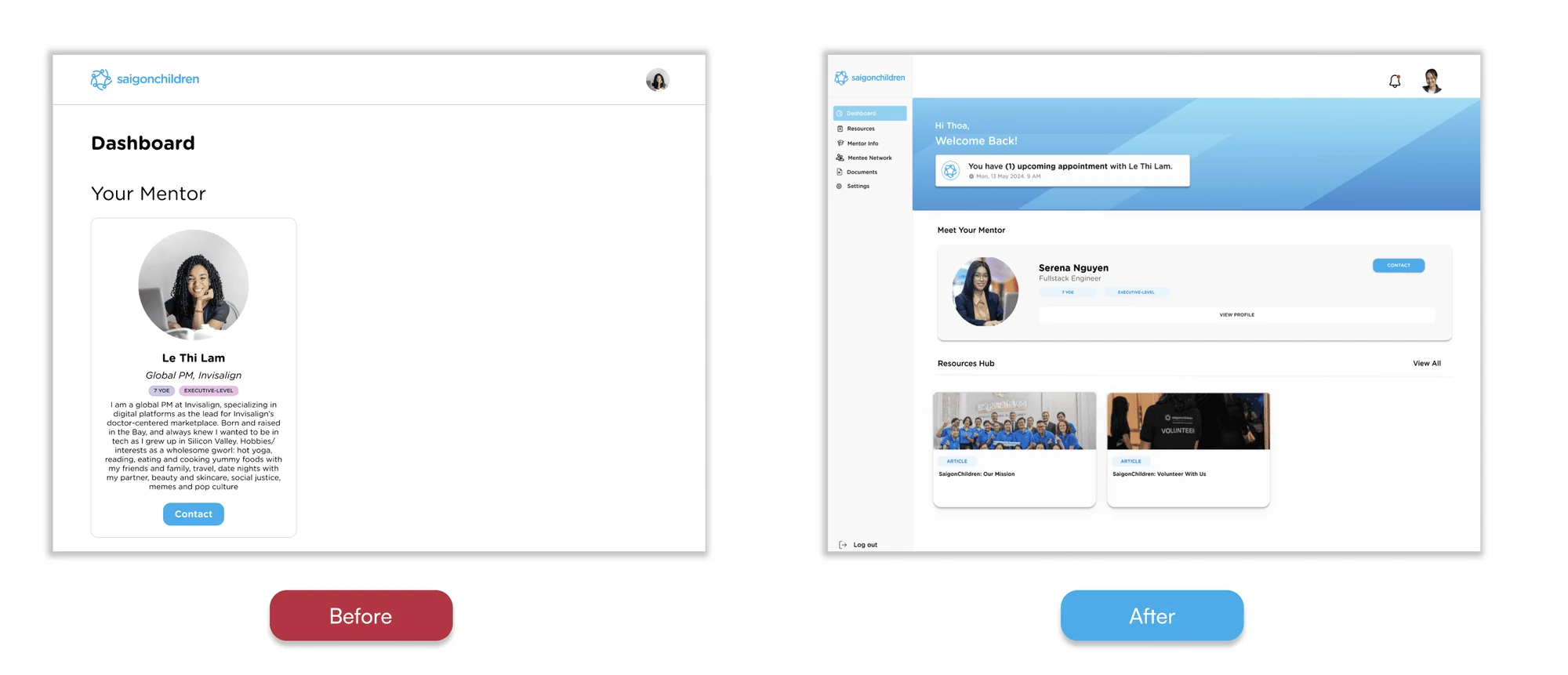
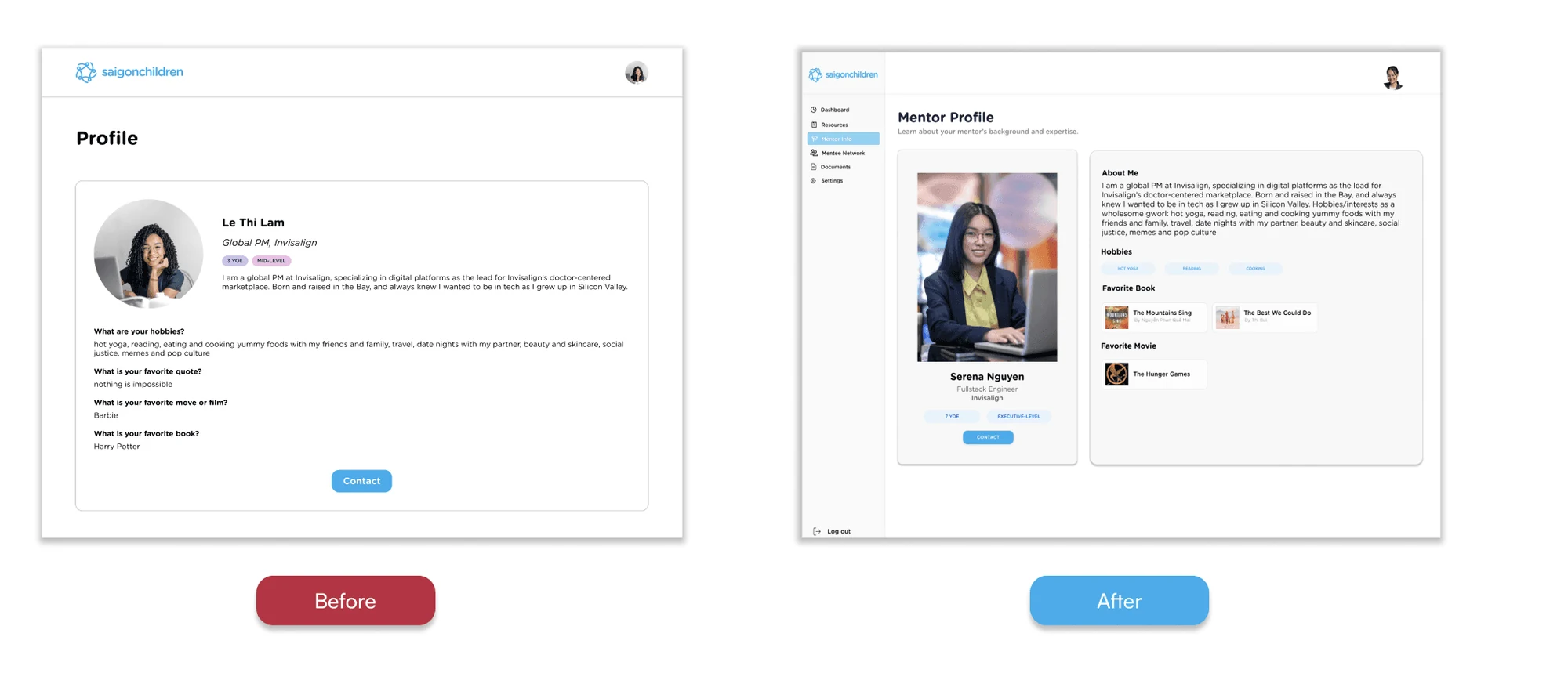
small changes, a much clearer experience.
building on past work: we refined what earlier teams started, guided by weekly stakeholder check-ins and user testing.
dashboard, forms, profiles: a clear sidebar and friendly greeting on the dashboard, forms grouped logically, and profiles split into sections with book and movie covers instead of plain text.
a clearer path for K–12 students and tutors.
the mission: Project Art of Learning connects 400+ K–12 students from low-income and refugee communities with free 1:1 online tutoring.
the problem: the site was text-heavy, hard to navigate, and had no interactive features.
research: a UX audit, a survey of 21 students and tutors, and interviews, synthesized with affinity mapping into two core problems: navigation and access to key content.
my role: UX designer leading the redesign on a team of 5 UX designers · Jan – May 2024 · Figma, Google Forms.
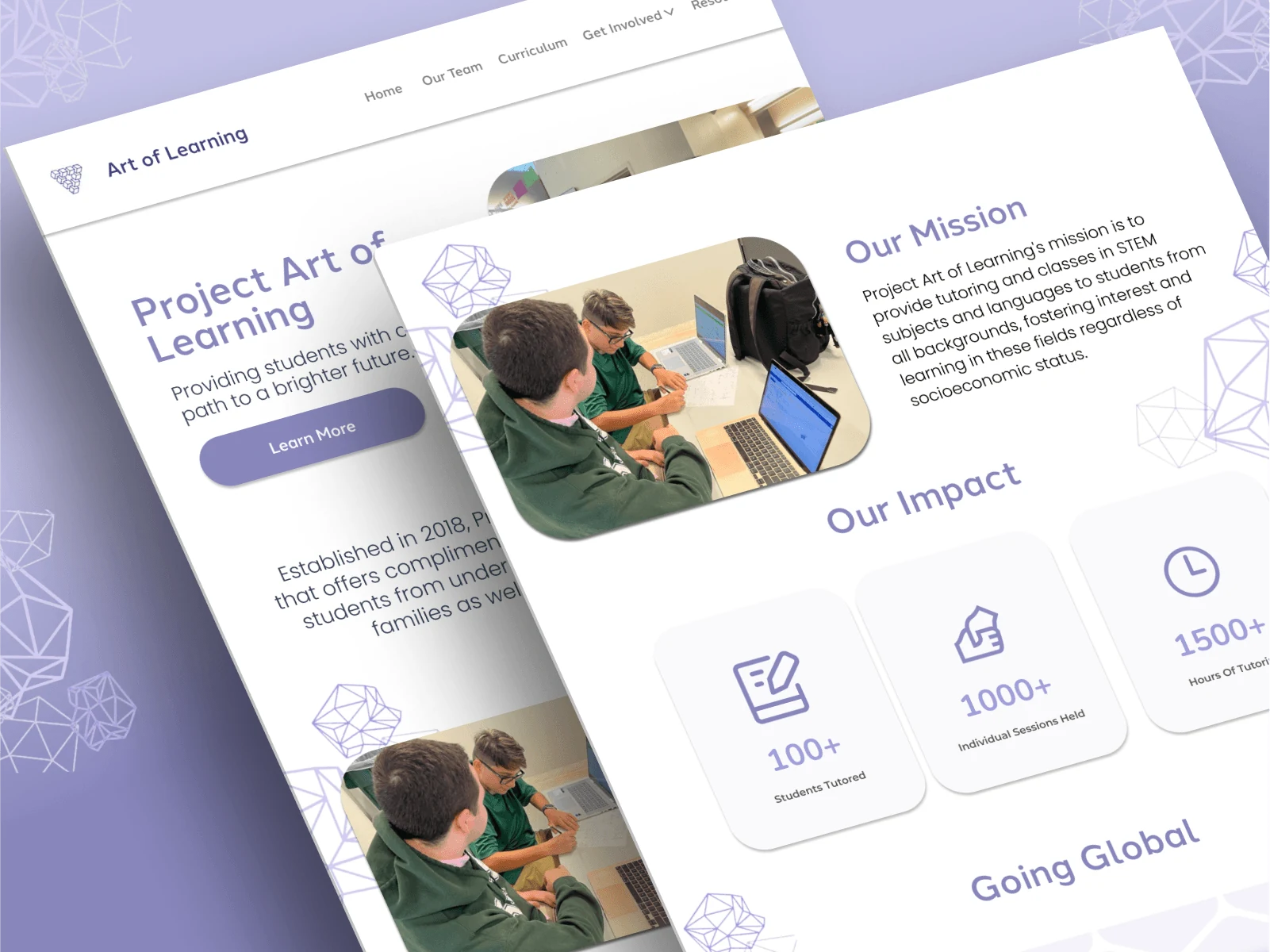
restructured, tested with 21 users, then polished.
redesign: a new site map, dedicated pages for students, tutors, and FAQs, and visuals in place of long text.
testing: 21 users tested the mid-fi prototype over Zoom and surveys. most found it clear and easy to navigate, and their notes on the “apply” section shaped our updates.
final features: an interactive map that shows each branch when you click a pin, a curriculum carousel, and a collapsible FAQ.
what these projects taught me.
good design depends on good communication. working with stakeholders in Vietnam across a 15-hour time difference taught me to write clearly and stay flexible while keeping a project moving.
prototype early, test often. great design isn't about getting it right the first time, it's about getting closer every round.
what it added up to.
numbers come from my own records and the organization's reports.
- designing from research, not assumptions
- working inside real constraints with developers and stakeholders
- the human-centered thinking i now bring to marketing
i'd bring marketing into the process earlier, pairing each redesign with a simple plan for how the organization would tell people about it.